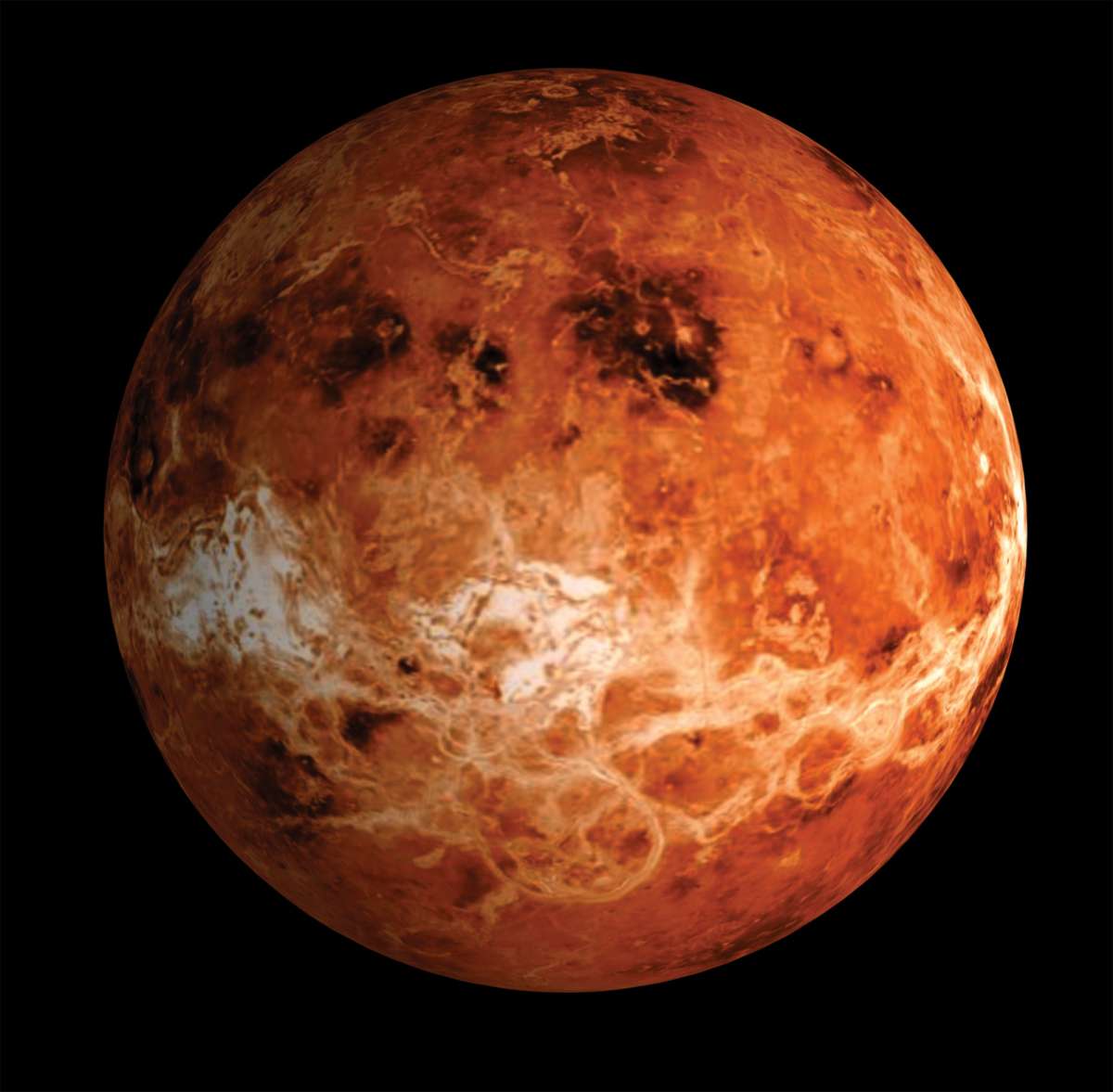
Today, in the heliocentric heaven, that is the heaven of great causes, we see, in the sign of Scorpio, the conjunction of Venus with the asteroid Melpomene.
Venus embodies the canon of harmonious beauty and is the alter ego of Earth.  Scorpio is the sign that presides over the Fourth Hierarchy, the human one, and transmits the energy of the 4th Ray. Melpomene, she who sings, is the Muse of tragedy.
Let us imagine the graceful Venus joining Melpomene and passing through Scorpio, a sign that loves to dig deep, get to the bottom of things, and remove masks. It is both the agent of deception and the Light of liberation: deceit and triumph, the prevalence first of Maya and then of the Soul, war and peace, are Its secrets.
The result is an atmosphere of beauty that arises from the shadows, and in the company of Melpomene, beauty is tinged with dramatic depth, gravitas and integrity, without half measures, so as to transform wounds into awareness, desire into intuition, drama into wisdom.
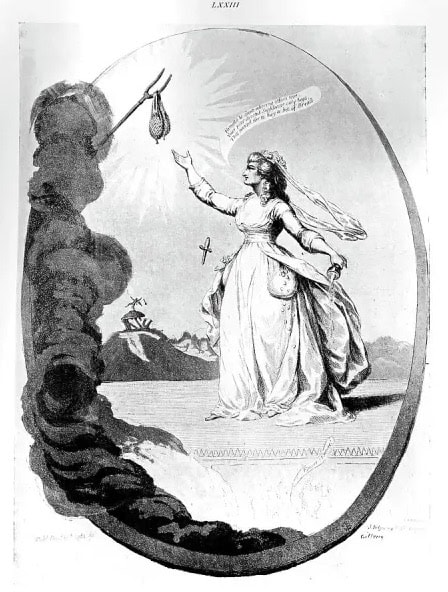
It is a configuration that invites us not to flee from intensity but to use it as a sacred fire, with love and sacrifice that renounces personal motives in order to serve the common Good.
It is a situation that evokes love and death, Eros and Thanatos, and their continuous alternation.
Fratelli, a un tempo stesso, Amore e Morte
Ingenerò la sorte.
Cose quaggiù sì belle
Altre il mondo non ha, non han le stelle…
[Children of Fate, in the same breath
Created were they, Love and Death.
Such fair creations ne’er were seen,
Or here below, or in the heaven serene…]
These are verses by Giacomo Leopardi, for whom Love and Death are primordial forces that accompany human beings along the path of life and push them towards infinity.
Eros, named after the Greek god of love, is the tendency (Desire) for attraction between elements: it generates, unites and warms. Thanatos, named after the Greek god of death, is the tendency for disintegration between elements: it destroys, fragments and separates.
Each growth of spirit requires burdening through circumstances. There exists an ancient legend that out of human sufferings are created precious stones. Thus it is, and when I say, “Burden Me”, it does not mean that I bring a sacrifice, I am only multiplying the power of the spirit… It is time to understand the responsibility and the privilege afforded by earthly incarnations. Yet people often avoid listening to the waves of space and catching the echoes and answers which come from various strata of the Universe… Harken to the Voice of Eternity, which leads to Bliss and Light. Fear not, fear not, fear not! (Agni Yoga Series, Hierarchy § 38)
Eros is the personification of nature’s attractive force that presides over the union of elements and beings, uniting the universe and the perpetuity of species. For this reason, in the human sphere, he is also considered by the Greeks to be the god of amorous attraction, corresponding to the god that the Romans called Love or Cupid. The personality of this deity is very complex: he is what moves us towards something, a divine principle that drives us towards beauty.
Thanatos, in Greek mythology, represents the personification of death and is also referred to as the One who rules death and as the Supreme Legion.
Two opposing and complementary forces therefore contend for the heart of the human soul: Eros, the vital and creative impulse, and Thanatos, the destructive thrust and return to the inorganic.
The relationship between Eros and Thanatos, conceived by Freudian and Jungian psychoanalysis as the two fundamental impulses that govern the human psyche and profoundly influence the transformations of the Self, generates a continuous process of negotiation between these opposing forces.
Eros can push the subject to evolve, but the conflict with Thanatos can generate moments of crisis and psychological darkness that test identity.
Eros leads individuals to seek connection with others and with the outside world, which is essential for the expansion of consciousness and the integration of new dimensions of experience.
In this specific phase, individuals begin to feel a unity between their inner and outer worlds, seeking to express their authentic Selves in their relationships with others.
Although Thanatos may initially seem negative, we must recognise that it has its own transformative function, as it leads to the need to change, to transform, to die to dysfunctional patterns, old ways of being, outdated identities and models that are no longer useful to the process of individuation.
Thanatos allows for the exhaustion of what is obsolete and provides an opportunity for renewal and transformation, letting go of limitations, beliefs, fears, phobias, threats and illusions. In this sense, Thanatos is also the possibility of rebirth: the death of the ego to make room for the birth of the Self.
The connection between Eros and Thanatos is central to individuation, since the integration of both forces allows the individual to realise a complete Self. Eros without Thanatos could lead to excessive identification with personality and superficial desires, while Thanatos without Eros could lead to despair and isolation.
These are two energies in constant dialogue: the first builds, embraces and ignites life, while the second dampens, destroys and seeks to return to silence. This dance, like an eternal tango, shapes our behaviour, our desires and even our artistic creations.
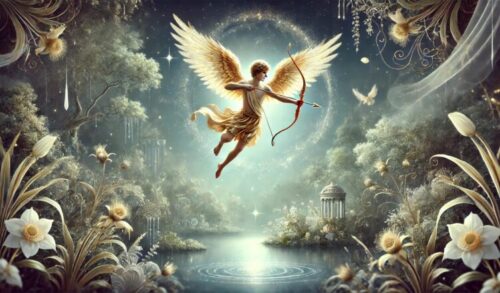
We find Eros as a vital, expansive, connective force in many spiritual paths where it is the divine impulse that animates the cosmos:
In Taoism, it is Qi that flows and sets everything in motion;
In Tantra, it is Shakti, the creative energy;
In mystical Christianity, it recalls the idea of Agape, the love that unites everything;
In esoteric traditions, it is the force that drives the soul to grow and seek unity.
Thanatos, as a return to the origin, to silence, to the spiritual desire for total peace, is viewed positively in many traditions:
In Buddhism, it is the movement towards Nirvana;
In Taoism, it is the return to the Void;
In Western mysticism, it is the yearning to lose oneself in God.
On the inner journey, Eros is the spark that urges us towards the search for truth, light, and the desire to embrace existence instead of suffering it. It is the energy that moves, opens, and expands.
Thanatos is the other half necessary to dissolve illusions, to let go of the personality that wants to be right, to renounce what weighs us down: it does not destroy but frees up space, it is not dying but melting like snow in the sun.

An authentic spiritual journey continuously alternates between these two impulses:
Eros: I explore, I understand, I open myself up.
Thanatos: I let go, I remain silent, I empty myself.
A bit like breathing in and breathing out, like a monk who studies texts in the morning and sits in silence at sunset.
Magic happens and the journey flourishes when these two energies become allies: when Eros says he wants to go further, Thanatos responds by letting go of what is not needed to go further.
Then life becomes lighter and we grow effortlessly, like a plant that has finally found light and good soil… Let’s imagine the journey as an inner theatre:
Eros is the enthusiastic actor who wants to inspire, rehearse and learn his part. Thanatos is the Zen director who, every now and then, says to him: “Right, now stop fidgeting and remove everything that is unnecessary”.
When the two get along… the show becomes sublime.
The secret is rhythm, like breathing in and out: Eros fills us with life, Thanatos frees us from the superfluous, and when the flow is balanced, we feel alive without agitation and at peace without fading away.
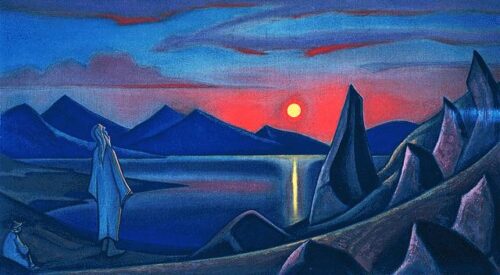
The achievement of the spirit consists in that amidst earthly difficulties and struggles the spirit develops the higher striving… Thus, when it is said, “the achievement of spirit will be with those who have known the struggle and search for knowledge”, it means this will be a fiery attainment… (Agni Yoga Series, Fiery World III § 37)