[Article by Elisabeth G., translated from French]
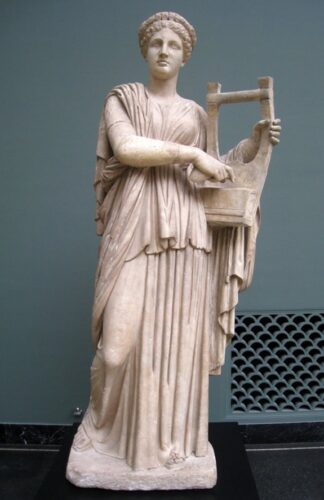
Today, June 22, Pluto – Sovereign Lord of the First Ray – is in conjunction with the asteroid/Muse Erato* in Aquarius, sign of the New Era, and together we can sing a Hymn to Brotherhood, the next evolutionary achievement of Humanity.
In fact, Pluto in Aquarius is inviting humanity to abandon separatism, the egoism of personal consciousness, and turn towards group consciousness, soul unity, a brotherhood of all. Pluto calls for the death of separativeness in order to move towards right relationships.
Only Brotherhood will save the world, a fraternity born of right relationships between human beings, where each recognises the divine essence of the other. “Love is essentially the realisation of brotherhood. It is the recognition that we are all the children of the One Father; it is pity and compassion and understanding and patience. It is the true expression of the life of God.” (A. A. Bailey – From Bethlehem to Calvary, p. 268)
“That which is most sacred surrounds the concept of Brotherhood. That which is most joyful lives in the consciousness that there exists cooperation of Knowledge. Such thought affirms that somewhere there are living True Co-workers…” (Agni Yoga Series – Brotherhood § Introduction)
*
The hymn, from the Latin hymnus, itself from the ancient Greek ὕμνος, is a ‘song in praise of God’. Erato sings the praises of brotherhood, of the oneness of all beings, because like her sisters the Muses, she sings and dances the Music of the celestial or inner Spheres.
“The Thinker said, “I would like to have in all labor the resounding of the chords of space. The Great Music is the labor of our Patrons, the Muses.” (Supermundane § 411)
“The Thinker insisted that man should rekindle his heart with music, since music was linked to the realm of all the Muses.” (Supermundane § 557)
“We strengthen our listeners with all the qualities necessary on the path to Brotherhood. It is not enough to possess only certain separate qualities, it is needful to realize their complete combination. The symphony of qualities is like the symphony of the spheres. … Then comes the next step of joy, precisely that concerning the beauty of symphony of qualities.” (Brotherhood § 60)
*
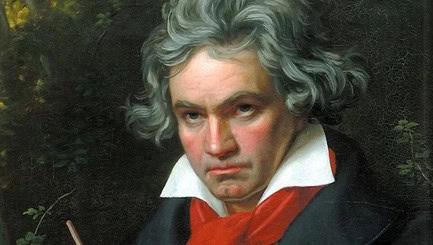
The Ode to Joy** was originally a poem by Friedrich von Schiller, written in 1785, which celebrates the ideal of human unity and brotherhood. The ‘Ode to Joy’ is best known for its use by Ludwig van Beethoven in the fourth and final movement of his Ninth Symphony, completed in 1824. Beethoven’s text introduces a number of new sections celebrating brotherhood into Schiller’s poem: it is a hymn to Brotherhood that we can sing together, because “by joy is Brotherhood maintained” (Brotherhood § 437)
“There can be the finest music and singing, yet nothing will resound in the heart that is deaf. In contrast, a refined heart will tremble in harmonious response to the rhythm. The seeker will then become better, more courageous and strong; he will be a worthy co-worker of the earthly and of the Supermundane, and will find joy.” (Supermundane § 605)
*
Joy!
Joy!
Joy, thou beauteous godly lightning,
Daughter of Elysium,
Fire drunken we are ent’ring
Heavenly, thy holy home!
Thy enchantments bind together,
What did custom stern divide,
Every man becomes a brother,
Where thy gentle wings abide.
Who the noble prize achieveth,
Good friend of a friend to be;
Who a lovely wife attaineth,
Join us in his jubilee!
Yes — he too who but one being
On this earth can call his own!
He who ne’er was able, weeping
Stealeth from this league alone!
Joy is drunk by every being
From kind nature’s flowing breasts,
Every evil, every good thing
For her rosy footprint quests.
Gave she us both vines and kisses,
In the face of death a friend,
To the worm were given blisses
And the Cherubs God attend.
As the suns are flying, happy
Through the heaven’s glorious plane,
Travel, brothers, down your lane,
Joyful as in hero’s vict’ry.
Be embrac’d, ye millions yonder!
Take this kiss throughout the world!
Brothers — o’er the stars unfurl’d
Must reside a loving Father.
Fall before him, all ye millions?
Know’st thou the Creator, world?
Seek above the stars unfurl’d,
Yonder dwells He in the heavens.***
___________________________________________________________________________
* Erato (she who provokes desire) is one of the nine Muses, the one of love poetry, the one who awakens eros, the beauty and strength of feelings, desire; also the Muse of choral singing, then of geometry and pantomiming. Ardour/eros. Erato (Greek Ερατώ) is depicted as a young woman, wearing a crown of myrtle and roses, holding a lyre in one hand and a plectrum in the other, and sometimes placed beside her is Cupid armed with a bow and quiver. Her name seems to mean ‘Lovable’ and is derived from Eros. In Plato’s Phaedrus, Erato is also depicted as a figure linked to love.
** Beethoven’s music was also adopted as the European Anthem, based on the melody alone. In fact, the European Anthem was adopted without a title or words, because of Europe’s multilingualism: it is officially considered that music is a language per se that exalts European ideals.
*** Different versions of the text are available on the internet.